
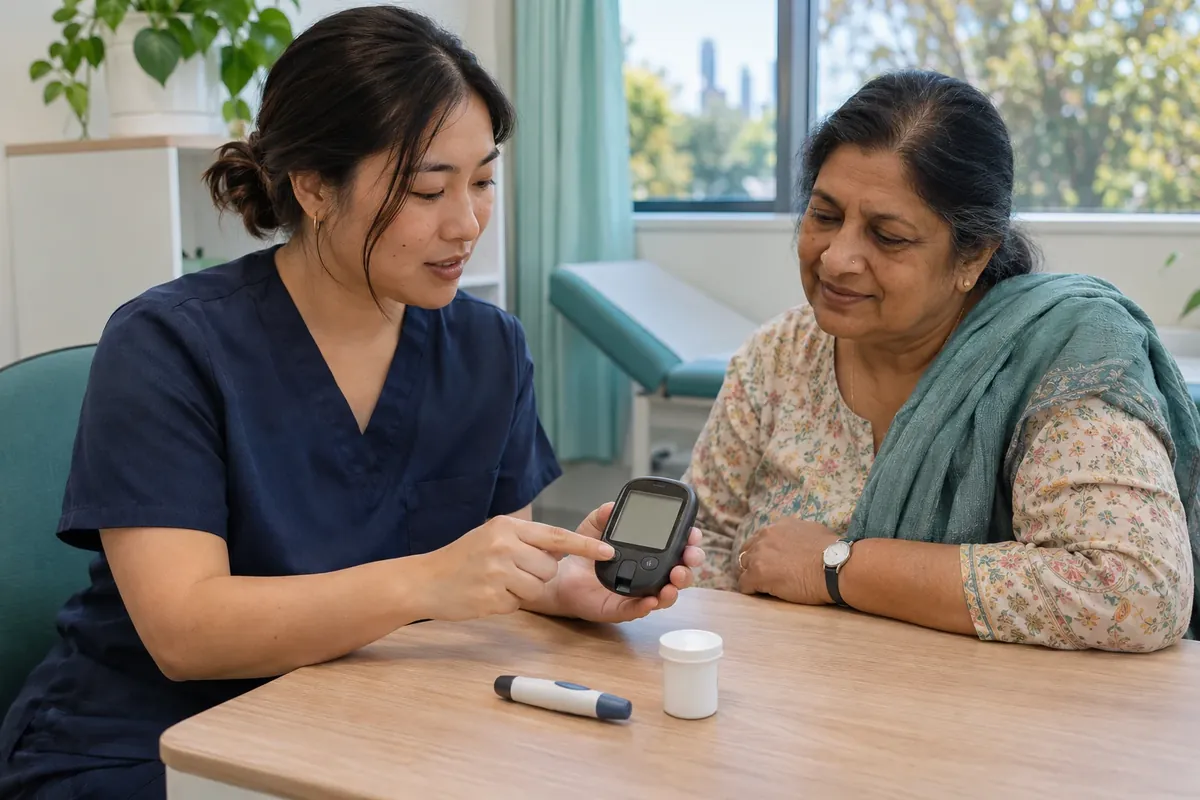
Diabetes is managed day to day by the person who has it, which is why education matters as much as medication. Gihan Girgis is a Credentialled Diabetes Educator with more than seven years in diabetes care, consulting at Hope Medical Centre alongside our GPs and dietitian. She works with teenagers from 17 and adults with type 1, type 2 and gestational diabetes, and with people at risk of developing it.
Greater Dandenong has one of the highest rates of diabetes in Victoria, and many of our patients come from communities where the risk is higher still. Our team provides culturally aware advice and can arrange interpreters, so you get information you can actually use.
What a diabetes educator helps with
- Understanding your diagnosis and what your numbers mean
- Blood glucose meters and continuous glucose monitors — choosing, setting up and reading them
- Starting insulin and adjusting doses, injection technique and managing hypos
- Tablets and other diabetes medicines — how they work and how to take them
- Gestational diabetes — monitoring and management through pregnancy
- Pre-diabetes — what it means and how to reduce the chance of it becoming type 2
- Sick-day plans, travel, fasting (including Ramadan) and exercise
- Preventing complications — feet, eyes, kidneys and heart
- Access to the National Diabetes Services Scheme (NDSS) for subsidised supplies
Your diabetes team under one roof
Good diabetes care is a team effort. Your GP coordinates it — prescribing, monitoring HbA1c, blood pressure, cholesterol and kidney function, checking feet, and arranging eye checks — and prepares a Chronic Condition Management Plan that funds visits to the educator and dietitian. Our dietitian, Devni Meewathurage, helps with eating patterns that keep blood sugar steady while still enjoying food. Our on-site pathology means your HbA1c and other tests are collected here. If you need an endocrinologist, podiatrist or eye specialist, we refer and keep track.
Annual diabetes cycle of care
Medicare supports a yearly cycle of checks for people with diabetes: HbA1c at least twice a year, blood pressure and weight, cholesterol, kidney function, a foot examination, an eye check every two years, a review of your medications and your self-care, and a check-in with the educator and dietitian. We keep a recall system so nothing is missed, and we'll remind you when something is due.
Fees
GP consultations and blood tests are bulk billed for Medicare card holders. Diabetes educator and dietitian visits are privately billed, with Medicare rebates available under a Chronic Condition Management Plan for up to five allied health visits per calendar year. People with type 2 diabetes may also be eligible for Medicare-funded group education sessions. Reception can confirm current fees.
What to bring
- Medicare card and NDSS card if you have one
- Your blood glucose meter or CGM reader, and any readings
- A list of all medications and insulin doses
- Recent blood test results if done elsewhere
- Your care plan or referral, if your GP prepared one
Frequently asked questions
What is a credentialled diabetes educator?
A health professional — often a nurse, dietitian or pharmacist — with additional qualifications in diabetes care, credentialled by the Australian Diabetes Educators Association. Credentialling is required for Medicare rebates.
Do I need a referral to see the diabetes educator?
Not for a private appointment. A GP referral under a Chronic Condition Management Plan is needed to claim a Medicare rebate.
Is diabetes education bulk billed?
Educator visits are privately billed with a Medicare rebate under a care plan. GP visits and pathology are bulk billed for Medicare card holders.
I've just been diagnosed with type 2 diabetes — where do I start?
Book a GP appointment. Your GP will arrange blood tests, start treatment if needed, prepare a care plan and refer you to the educator and dietitian so you understand the condition and how to manage it.
Can you help me start insulin?
Yes. The educator teaches injection technique, dose adjustment, hypo management and monitoring, with your GP overseeing the prescription.
I have gestational diabetes — can you see me?
Yes. The educator and dietitian support you through pregnancy with monitoring and eating advice, working with your GP and your hospital antenatal team.
Can I fast during Ramadan if I have diabetes?
Many people can with the right plan. Talk to your GP and educator a few weeks before Ramadan so medication timing and monitoring can be adjusted safely.
What is the NDSS?
The National Diabetes Services Scheme provides subsidised test strips, needles and other supplies, plus free information and programs. Registration is free; your GP or educator can help you register.
This page is general information only and is not a substitute for a consultation. Your GP will assess whether this service is suitable for you. Information reviewed November 2026.