
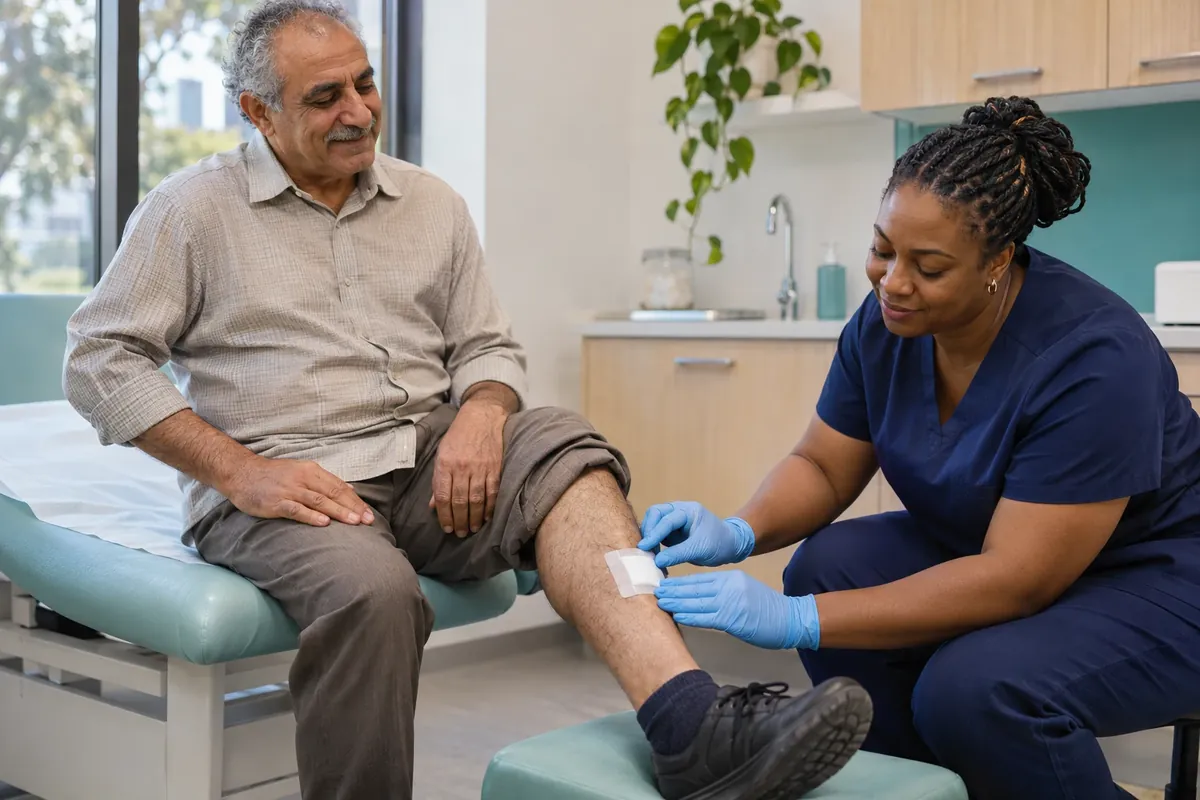
Good wound care speeds healing and prevents infection, and most wounds do best with the right dressing, changed at the right interval, by someone who knows what to look for. At Hope Medical Centre our practice nurse provides wound care under the supervision of our GPs, so if a wound isn't healing as it should, a doctor can review it the same visit.
We look after wounds after surgery, injuries, burns and ulcers, and we're happy to continue care that started at a hospital — bring your discharge notes and we'll take it from there.
Wound care services
- Dressing changes after surgery or hospital discharge
- Removal of stitches, staples and clips
- Cuts, grazes and lacerations — cleaning, closure and dressing
- Minor burns and scalds
- Leg ulcers, pressure sores and diabetic foot wounds
- Wound infection assessment and treatment with your GP
- Tetanus boosters when needed
- Advice on dressings to use at home between visits
Slow-healing and chronic wounds
A wound that hasn't healed in about four weeks is considered chronic, and the dressing is only part of the answer. Our GPs look for the reasons — poor circulation, diabetes, infection, pressure, swelling or nutrition — and treat those alongside the wound. People with diabetes or a foot wound are seen promptly, because small problems can become serious quickly.
Signs of infection — see us promptly
- Spreading redness or red streaks around the wound
- Increasing pain, swelling or heat
- Pus or an unpleasant smell
- Fever or feeling unwell
- A wound that reopens or is bleeding heavily
If you notice any of these, call the clinic the same day. For heavy bleeding or a deep wound, call 000 or go to the emergency department.
Fees
Wound care appointments with our nurse and GP are bulk billed for Medicare card holders. Some specialised dressings aren't covered by Medicare; if a dressing carries a cost, we'll tell you and discuss alternatives, including dressings you can buy from the pharmacy and bring with you.
What to bring
- Medicare card
- Hospital discharge notes or a letter describing the wound and dressing plan
- Any dressings you were given to continue with
- A list of medications, including blood thinners and diabetes medicines
Frequently asked questions
Can I have a dressing changed without seeing the doctor?
Yes. Nurse appointments are available for dressing changes. A GP reviews the wound at your first visit and whenever the nurse has a concern.
Do you remove stitches and staples?
Yes. Book a nurse appointment; the timing depends on the wound and will be on your discharge notes or advised by your doctor.
Is wound care bulk billed?
Appointments are bulk billed for Medicare card holders. Some specialised dressings have a cost, which we'll discuss with you first.
How often do I need to come in?
It depends on the wound — often every two to three days early on, then weekly as it heals. The nurse sets the schedule with you.
What if my wound looks infected?
Call us the same day. Spreading redness, increasing pain, pus or fever need prompt review.
Can you treat burns?
Minor burns and scalds, yes. Deep, large or facial burns, or burns in children, may need hospital care and we'll direct you appropriately.
Do you manage leg ulcers?
Yes. Leg ulcers need both dressings and treatment of the cause, such as circulation problems or swelling, which our GPs assess.
Do I need a referral?
No. Book directly with the clinic.
This page is general information only and is not a substitute for a consultation. Your GP will assess whether this service is suitable for you. Information reviewed November 2026.