
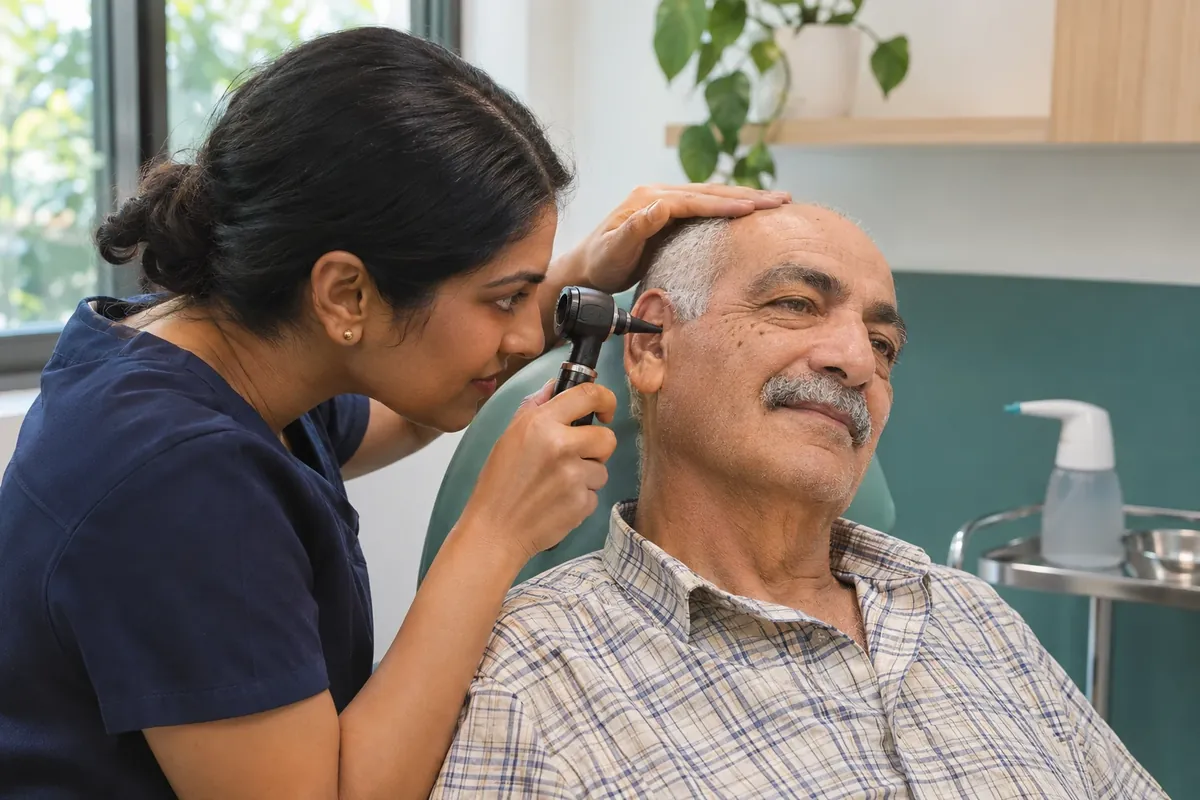
Ear wax is normal and usually clears on its own, but hearing aids, earbuds, narrow ear canals and cotton buds can push it into a plug that blocks the canal. The result is dull hearing, ringing, discomfort and sometimes dizziness. Removing it safely is a quick job — but only after a doctor has looked in the ear, because the same symptoms can come from infection, a perforated eardrum or fluid behind the drum, where flushing the ear would be the wrong thing to do.
At Hope Medical Centre a GP examines the ear first, then our practice nurse removes the wax in the treatment room, usually at the same visit. If microsuction by an audiologist is more appropriate — for example after ear surgery or with a perforation — we refer you and let you know what to expect.
Ear problems we treat
- Wax build-up and blocked ears
- Outer ear infections (swimmer's ear) and middle ear infections, in children and adults
- Earache and ear pain, including pain from the jaw, teeth or throat
- Glue ear and recurrent infections in children, with referral to an ENT specialist when needed
- Tinnitus (ringing) and sudden hearing changes — sudden hearing loss is urgent, so call the same day
- Hearing concerns, with referral for hearing tests and assistance with hearing services for eligible pensioners
- Dizziness and vertigo related to the inner ear
- Foreign objects in the ear canal
How wax removal works
- The GP looks in your ear with an otoscope to confirm it's wax and that the eardrum is healthy.
- If the wax is hard, you may be asked to use softening drops for a few days first — reception will tell you when you book, so you can start them before your visit.
- Our nurse removes the wax using gentle ear irrigation (water at body temperature) or manual removal with a small instrument. It takes about 10 to 15 minutes and may feel odd but shouldn't hurt.
- The ear is checked again, and you'll notice the difference straight away.
Please don't use cotton buds, ear candles or sharp objects — they push wax deeper and can damage the eardrum. Using olive oil or over-the-counter wax-softening drops for a few nights before your appointment makes removal easier.
Ear infections in children
Middle ear infections are one of the most common reasons parents bring children to the doctor. Most settle with pain relief alone within a couple of days; antibiotics are used when infection is severe, in very young children, or when it isn't improving. Your GP will examine the ears, advise on pain relief and antibiotics, and arrange a follow-up if fluid persists or infections keep returning, as that can affect hearing and speech.
Fees
Ear examinations and wax removal by our nurse are bulk billed for Medicare card holders. Audiology microsuction, if referred, is charged by the audiology clinic.
What to bring
- Medicare card
- Softening drops if you've started them, and any ear drops prescribed
- Hearing aids, so they can be checked after the wax is removed
- A note of any previous ear surgery or perforation
Frequently asked questions
Can a GP remove ear wax?
Yes. After a GP confirms it's wax and the eardrum is intact, our practice nurse removes it in the clinic, usually at the same visit.
Is ear wax removal covered by Medicare?
The appointment is bulk billed for Medicare card holders at Hope Medical Centre, so there's no cost to you. Microsuction at an audiology clinic is private.
Does ear syringing hurt?
It can feel strange — warm water in the ear and some pressure — but it shouldn't be painful. Tell the nurse if it is.
Do I need to use drops before coming in?
If the wax is hard, yes — a few nights of olive oil or wax-softening drops makes removal quicker and more comfortable. Reception will advise when you book.
What is microsuction and do you do it?
Microsuction removes wax with a small suction device under magnification, usually by an audiologist. We refer for it when irrigation isn't suitable, such as after ear surgery or with a perforated eardrum.
My child keeps getting ear infections — what can be done?
Your GP examines the ears, treats the infection, and if infections keep recurring or fluid persists, checks hearing and refers to an ENT specialist to discuss options such as grommets.
I've suddenly lost hearing in one ear — what should I do?
Call us the same day. Sudden hearing loss can have causes that need prompt treatment, and the sooner it's assessed the better.
Do you do hearing tests?
We assess hearing concerns and refer for a full hearing test with an audiologist. Eligible pensioners and veterans can access subsidised hearing services through the Hearing Services Program.
This page is general information only and is not a substitute for a consultation. Your GP will assess whether this service is suitable for you. Information reviewed November 2026.