
Two in three Australians will be diagnosed with skin cancer by the age of 70, and most of it is found by someone looking carefully at the skin. Melanoma found early is almost always curable; the common non-melanoma skin cancers are too. The check itself is simple — the hard part is booking it.
At Hope Medical Centre skin checks are performed by GPs with additional training in skin cancer medicine. Dr Suzette Meshreky holds the University of Queensland Primary Care Certificate in Skin Cancer Medicine, and Dr Satheesh Gabriel has a special interest in skin cancer detection. Anything that needs a biopsy or removal can usually be done here, in our treatment room, rather than at a separate clinic.
What a skin check involves
- Your GP asks about your skin history — past skin cancers, sunburn, family history, outdoor work, any spots you've noticed changing.
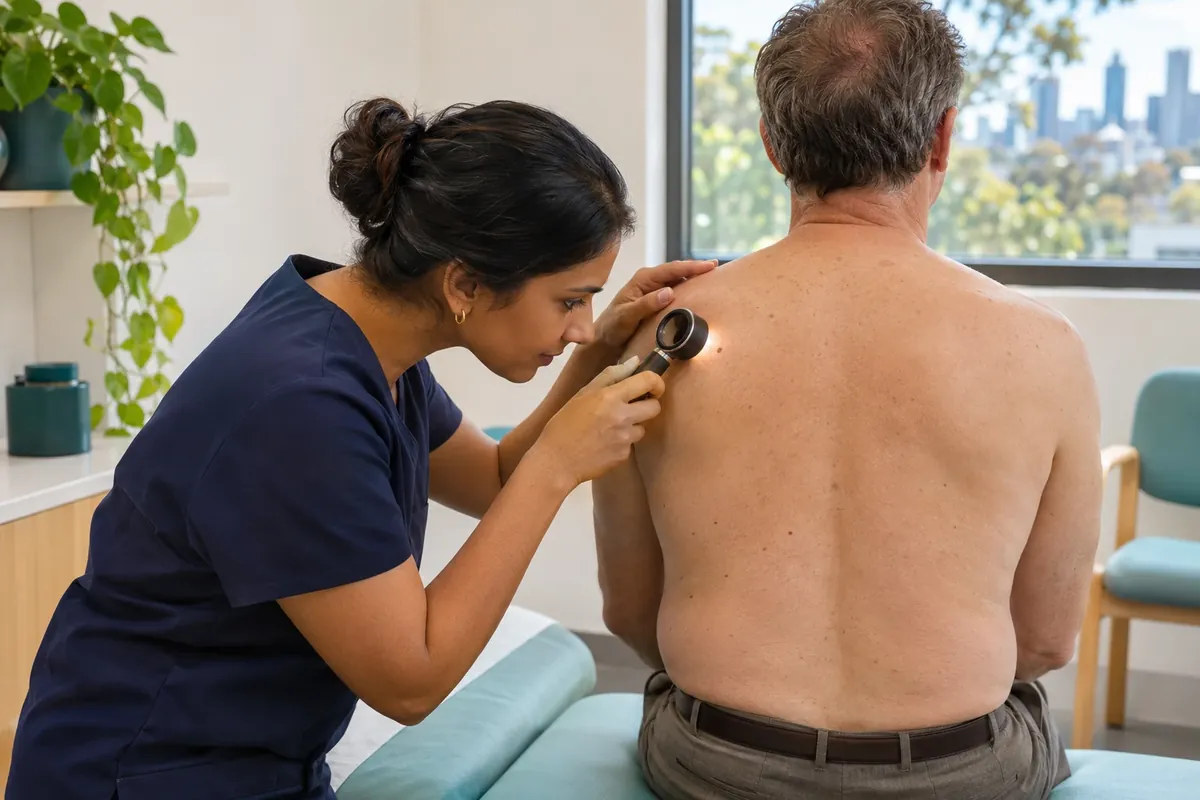
- You undress to your underwear and the doctor examines your skin from scalp to soles, including areas you can't see yourself, using a dermatoscope — a magnifying light that shows structures beneath the surface that the naked eye can't.
- Anything of concern is explained to you on the spot. Most spots are harmless and need nothing more than a note to watch them.
- If a spot needs a closer look, a small biopsy can usually be taken at the same visit under local anaesthetic, or a removal booked into the treatment room.
- Pathology results come back in about a week and your GP goes through them with you and plans any further treatment.
Allow about 20 minutes for a full-body check. Tell reception it's a skin check when you book so the right time is allowed.
Signs worth getting checked
You don't need a reason to have a skin check, but see us sooner rather than later if you notice:
- A new spot, or one that looks different from the others — the "ugly duckling"
- A mole that's changed in size, shape or colour, or has an irregular edge
- A spot that's itchy, bleeds, crusts or won't heal after a few weeks
- A pearly or shiny lump, or a scaly red patch that persists
- A firm pink or red lump that grows quickly
Who should have regular checks
- Anyone with a previous skin cancer or a family history of melanoma
- Fair skin, red or fair hair, skin that burns easily — but darker skin is not immune, and skin cancers in darker skin are often found later
- Outdoor workers, tradespeople and people who had sunburns as children
- Many moles, or large or unusual moles
- People taking medicines that suppress the immune system
- Over 40, or a long time since the last check
How often depends on your risk. For most people a check every one to two years is sensible; higher-risk patients are seen more often. Your GP will suggest a schedule and we'll remind you.
If something is found
Most skin cancers are treated by removing them under local anaesthetic, which our GPs do in the clinic's treatment room — see our minor procedures page for what to expect. Some lesions are treated with liquid nitrogen or prescription creams instead. Where a lesion is large, in a tricky location or needs specialist care, we refer you to a dermatologist or plastic surgeon and keep track of the result.
Fees
Skin checks and most biopsies and excisions are bulk billed for Medicare card holders. Pathology is billed by the laboratory and is usually bulk billed. If any part of your care would involve a cost, we'll tell you before it's booked.
What to bring
- Medicare card
- A note of any spots you're worried about — a photo on your phone helps
- No make-up, fake tan or nail polish if possible, so the skin can be seen clearly
- Your medication list, especially blood thinners if a biopsy might be needed
Frequently asked questions
Is a skin cancer check bulk billed?
Yes, for Medicare card holders. Biopsies and removals done in the clinic are also usually bulk billed; you'll be told beforehand if there would be any cost.
Do I need a referral for a skin check?
No. Book directly with reception and ask for a skin check appointment.
Can a GP do a skin cancer check, or do I need a dermatologist?
GPs with training in skin cancer medicine perform most skin checks in Australia and treat the majority of skin cancers. Our doctors refer to a dermatologist when a lesion needs specialist care.
How long does a full skin check take?
About 20 minutes for a full-body examination. A check of a single spot is quicker.
What is a dermatoscope?
A hand-held magnifying light used to see the structures within a mole or spot. It makes the examination far more accurate than looking with the naked eye and is standard in skin cancer medicine.
What happens if a spot looks suspicious?
Your GP will usually take a small biopsy under local anaesthetic, often at the same visit, and send it to pathology. Results take about a week, and treatment — if needed — is planned with you.
Will removing a spot leave a scar?
Any cut to the skin leaves some mark. Careful technique and aftercare keep it small, and most scars fade over months. Your GP will show you where the incision would go before anything is done.
How often should I have a skin check?
Every one to two years for most adults, more often if you've had skin cancer before or have other risk factors. Your GP will recommend a schedule for you.
I have darker skin — do I still need a skin check?
Yes. Skin cancer is less common in darker skin but it does occur, often on the palms, soles and under nails, and is frequently found later. A check is still worthwhile, especially for any changing spot.
This page is general information only and is not a substitute for a consultation. Your GP will assess whether this service is suitable for you. Information reviewed November 2026.