
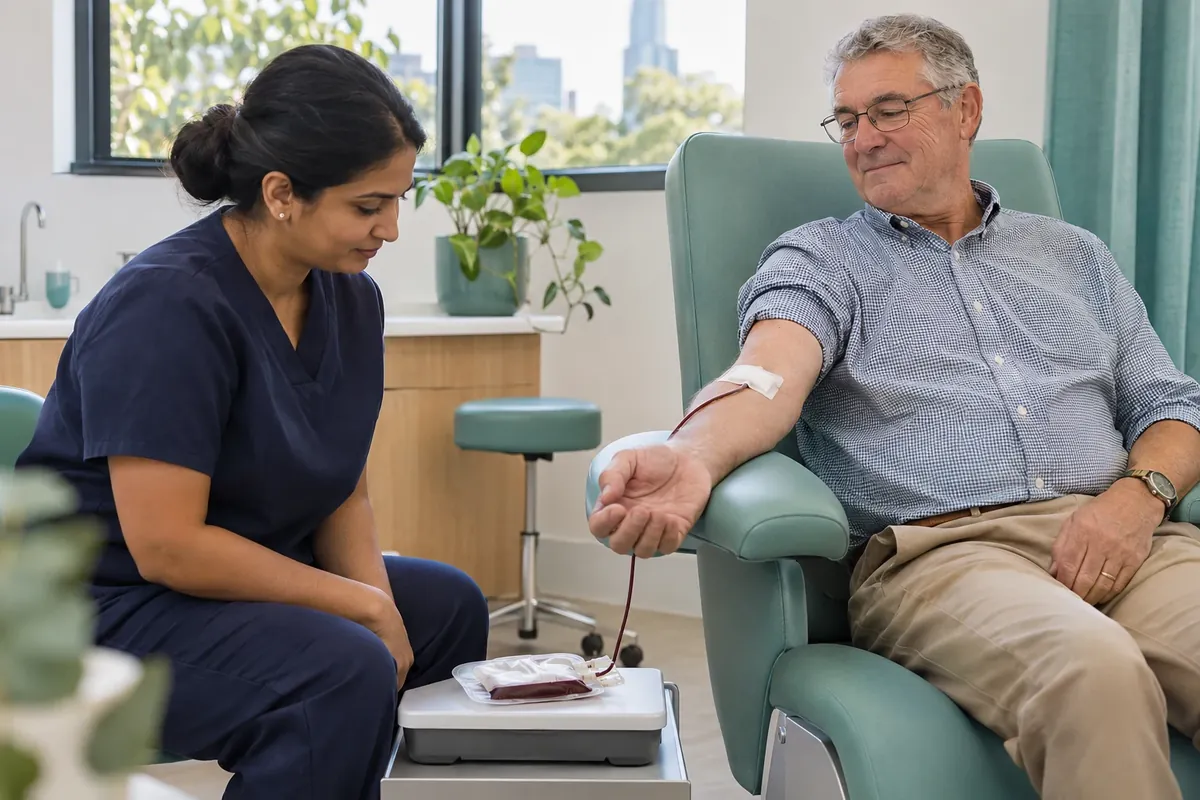
Venesection — sometimes called therapeutic phlebotomy or, informally, blood-letting — removes a unit of blood, around 450 mL, to lower the body's iron stores or red cell count. It is the standard treatment for hereditary haemochromatosis, where the body absorbs too much iron, and for polycythaemia, where there are too many red blood cells. Left untreated, iron overload can damage the liver, heart and joints; venesection prevents that.
Treatment usually starts with venesections every week or two until ferritin is in the target range, then drops to maintenance — often every three to four months — for life. Hope Medical Centre provides the procedure in our treatment room, with your GP monitoring your blood results and adjusting the schedule.
Who venesection is for
- Hereditary haemochromatosis — induction and long-term maintenance
- Polycythaemia vera and secondary polycythaemia, under a haematologist's plan
- High ferritin without a genetic cause, where your doctor has recommended venesection
- Porphyria cutanea tarda and other conditions where iron reduction is advised
People with genetic haemochromatosis who meet blood donor criteria can also have venesections free through Australian Red Cross Lifeblood. For those who don't meet donor criteria, or have secondary polycythaemia or high ferritin without the gene, a GP clinic is the usual option.
How it works
- Referral or plan — bring a letter from your GP or haematologist stating your diagnosis, target ferritin or haematocrit and how often venesection is needed. If you're a patient of ours, your GP sets this up.
- Before each visit — eat a meal, drink plenty of water and take your usual medications. A quick check of your blood pressure and haemoglobin confirms you're fit to proceed.
- The procedure — a nurse inserts a needle into a vein in your arm and collects about 450 mL of blood into a bag. It takes 15 to 30 minutes; allow 45 minutes in total.
- Afterwards — rest for 15 minutes, keep the bandage on for a couple of hours, drink extra fluids for the day and avoid heavy lifting with that arm or strenuous exercise for 24 hours.
- Monitoring — regular ferritin and full blood count tests, collected on-site, guide how often you need venesection.
Side effects
Most people tolerate venesection well. Light-headedness, fatigue for the rest of the day and bruising at the needle site are the common issues; fainting is uncommon and the nurse watches for it. Tell us if you feel unwell during or after the procedure.
Fees
Venesection is a Medicare-rebatable procedure and is bulk billed for Medicare card holders at Hope Medical Centre, along with the consultations and blood tests that go with it.
What to bring
- Your referral or treatment plan with targets and frequency
- Medicare card
- A list of medications
- Water bottle and a snack; wear sleeves that roll up easily
Frequently asked questions
Do I need a referral for venesection?
You need a treatment plan from a doctor stating your diagnosis, targets and frequency. Our own GPs can establish this for patients of the clinic; a letter from a haematologist or another GP is also accepted.
Does venesection hurt?
It feels like giving blood — a brief sting when the needle goes in and then little more than pressure.
How long does it take?
The collection takes 15–30 minutes; allow about 45 minutes including the check beforehand and rest afterwards.
How often will I need it?
Weekly or fortnightly at first until your ferritin reaches target, then usually every three to four months for maintenance. Your blood results decide.
Can I drive and work afterwards?
Most people can, after 15 minutes of rest. Avoid heavy lifting with that arm and strenuous exercise for 24 hours.
Why not just donate blood at Lifeblood?
If you have genetic haemochromatosis and meet donor criteria, that's a good free option. Lifeblood can't accept everyone — including many people with secondary polycythaemia or non-genetic high ferritin — and that's where a GP clinic comes in.
Is venesection bulk billed?
Yes, for Medicare card holders, along with the associated consultations and blood tests.
What should I do before an appointment?
Eat a meal, drink plenty of water and take your usual medications. Don't come fasting.
This page is general information only and is not a substitute for a consultation. Your GP will assess whether this service is suitable for you. Information reviewed November 2026.